
Your cart is currently empty.
Skip to product information
 Open media 1 in gallery view

 Open media 1 in gallery view

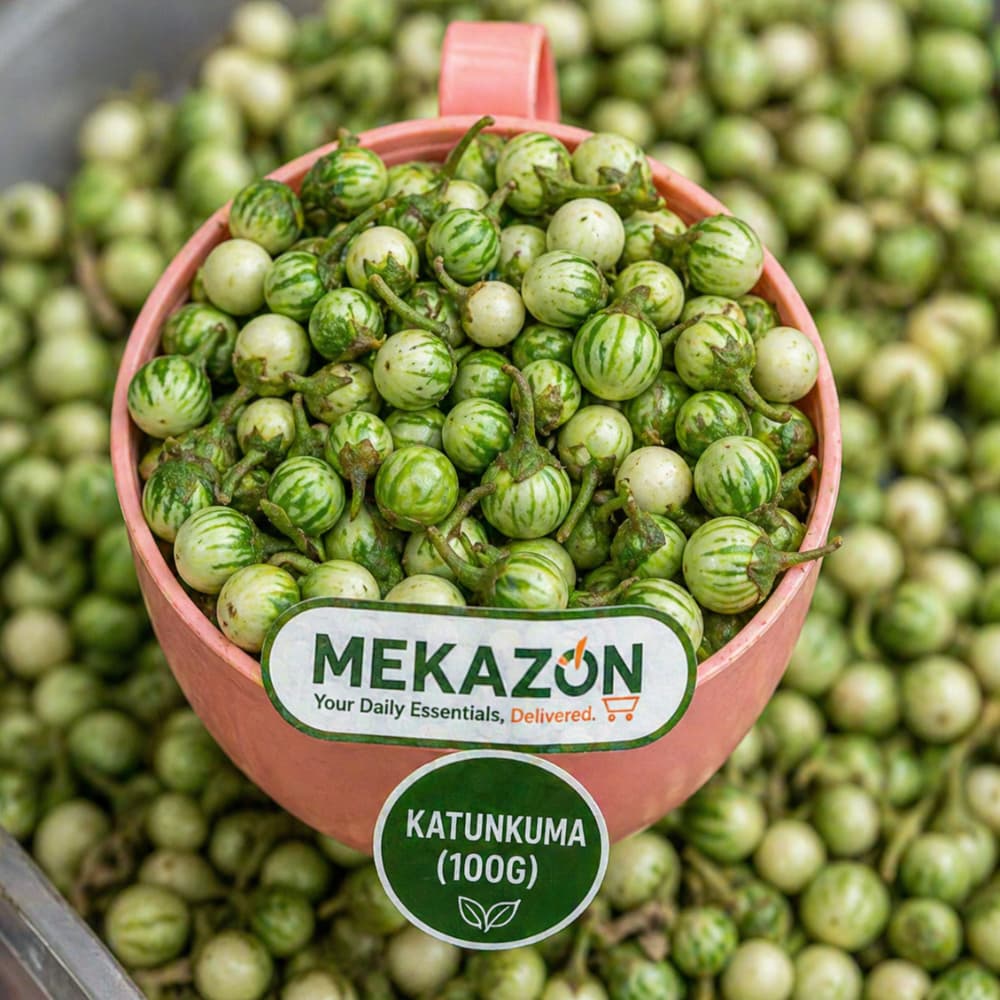
Katunkuma (African Garden Eggs) 100g – Fresh Bitter Berries | Mekazon UAE
Regular price
Dhs. 14.99
Add to wishlist
Add to Compare
Shop With Confidence on Mekazon:
✔ Cash on Delivery & Secure Online Payment — You’re Always in Control
✔ Free UAE Delivery on Orders Above 250 AED
✔ 100% Authentic African Products From Trusted Sellers
✔ Carefully Packed to Protect Freshness & Quality
✔ Dedicated Customer Support You Can Reach Anytime
✔ Cash on Delivery & Secure Online Payment — You’re Always in Control
✔ Free UAE Delivery on Orders Above 250 AED
✔ 100% Authentic African Products From Trusted Sellers
✔ Carefully Packed to Protect Freshness & Quality
✔ Dedicated Customer Support You Can Reach Anytime
Description
Specification
Additional information
Reviews
- Authentic African Katunkuma (Garden Eggs)
- Fresh & Natural Produce
- Distinct Slightly Bitter Flavor
- Perfect for Traditional Dishes
- Convenient 100g Pack
- Traditional Ugandan sauces and stews
- Mixed vegetable dishes
- Eaten fresh as a side
- Combined with groundnut (peanut) sauce
- Rich antioxidants
- Supporting digestion
- Low in calories
- Natural plant-based nutrients
- Product Name: Katunkuma (Garden Eggs)
- Weight: 100g
- Type: Fresh Produce
- Origin: East Africa
- Storage: Keep refrigerated
Enjoy the authentic taste of East Africa with Katunkuma, also known as African garden eggs. These small green berries are widely used in Ugandan and other African cuisines, known for their slightly bitter taste and rich nutritional value.
A traditional ingredient, Katunkuma is commonly added to sauces, stews, or eaten fresh alongside meals—bringing a true taste of home to your table.
Features & Highlights
How to Use
Katunkuma can be used in:
Why Buy from Mekazon?
At Mekazon, we specialize in bringing rare and authentic African ingredients to the UAE. Products like Katunkuma are not easy to find—so we make sure you get them fresh and delivered to your doorstep.
Nutritional Benefits
Katunkuma is known for:
(Note: General nutritional information, not medical advice.)
Product Details
Frequently Asked Questions
1. What is Katunkuma?
Katunkuma is a type of small green African eggplant (garden egg) commonly used in Ugandan cooking.
2. How does it taste?
It has a slightly bitter taste, which pairs well with sauces like groundnut (peanut sauce).
3. Can I eat it raw?
Yes, it can be eaten fresh or cooked in dishes.
4. How should I store it?
Keep it refrigerated to maintain freshness.
5. Is this commonly used in African food?
Yes, it is a traditional ingredient in many East African mea
Specification
Additional information
Customer reviews

